
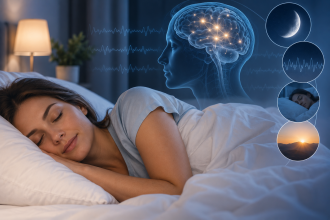
Sleep is an essential biological function and plays a vital role in the normal functioning of the brain and the body.
During sleep, the brain does not become inactive. On the contrary, complex processes take place that are associated with memory, learning, emotional regulation, restoration of the body, and the normal functioning of the immune and metabolic systems.
When the duration, quality, or normal architecture of sleep is disrupted, symptoms such as fatigue, sleepiness, difficulty concentrating, memory difficulties, mood changes, and significant impairment in daily functioning may occur.
Sleep disorders comprise a broad group of conditions, and identifying the underlying cause is essential for selecting the appropriate treatment.
Stages of Normal Sleep
Normal sleep consists of two main phases:
- NREM sleep (Non-Rapid Eye Movement)
- REM sleep (Rapid Eye Movement)
NREM sleep is divided into three stages: N1, N2, and N3.
Stage N1 – Transition to Sleep
N1 is the first and lightest stage of sleep. It represents the transition between wakefulness and sleep, during which responsiveness to external stimuli gradually decreases and the muscles begin to relax.
Stage N2 – Light Sleep
During stage N2, sleep becomes more stable. Heart rate and body temperature decrease, and characteristic changes occur in the electrical activity of the brain. N2 accounts for a significant proportion of total sleep time in adults.
Stage N3 – Deep Sleep
N3 is known as deep sleep or slow-wave sleep. During this stage, brain and muscle activity decrease significantly, while the body enters a state of deep rest. Deep sleep occurs predominantly during the first part of the night.
REM Sleep
REM sleep is characterized by rapid eye movements, intense brain activity, and a significant reduction in muscle tone. Vivid dreams occur more frequently during this phase, although dreaming can also occur during other stages of sleep. REM sleep is associated with important brain functions, including information processing, memory, and emotional functioning.
Sleep Cycles
During the night, NREM and REM sleep do not occur only once. Instead, they alternate repeatedly, forming sleep cycles. A healthy adult typically goes through approximately 4 to 6 sleep cycles during one night, with the duration and proportion of the different sleep stages changing as the night progresses. Deep NREM sleep is more concentrated during the first part of the night, while periods of REM sleep tend to become longer toward the morning.
Main Sleep Disorders
Sleep disorders are not limited to insomnia. They can affect the initiation and maintenance of sleep, breathing during the night, daytime alertness, circadian rhythm, body movements, or behavior during sleep.
The main categories include:
- Insomnia
- Sleep-related breathing disorders, such as sleep apnea
- Central disorders of hypersomnolence, such as narcolepsy
- Circadian rhythm sleep-wake disorders
- Parasomnias
- Sleep-related movement disorders
Insomnia
Insomnia may present as difficulty falling asleep, frequent awakenings during the night, waking too early in the morning, or sleep that does not provide the expected feeling of rest. When insomnia persists, it can significantly affect daytime functioning.
A person may experience:
- fatigue
- difficulty concentrating
- reduced performance
- irritability
- mood disturbances
- sleepiness or a feeling of exhaustion
Treatment depends on the cause and duration of insomnia and is not limited to the use of sleeping medications.
Sleep Apnea
Sleep apnea is characterized by repeated disturbances in breathing during sleep. The most common form is Obstructive Sleep Apnea (OSA).
Possible symptoms include:
- loud snoring
- episodes of interrupted breathing observed by another person
- sudden awakenings
- non-restorative sleep
- morning headaches
- dry mouth upon waking
- excessive daytime sleepiness
- difficulty concentrating
Sleep apnea requires appropriate diagnosis, as it can affect both sleep quality and the patient's overall health.
Excessive Daytime Sleepiness
An excessive need to sleep during the day should not always be attributed simply to fatigue or insufficient sleep. Excessive daytime sleepiness may be associated with insufficient sleep duration, sleep apnea, medications, other medical conditions, or central disorders of hypersomnolence. When sleepiness is persistent or causes involuntary sleep during everyday activities, further investigation is required.
Narcolepsy
Narcolepsy is a chronic neurological disorder affecting the regulation of sleep and wakefulness. It is primarily characterized by excessive daytime sleepiness and episodes of involuntary sleep.
Some patients may also experience:
- cataplexy, a sudden loss of muscle tone often triggered by strong emotions
- sleep paralysis
- vivid dream-like experiences while falling asleep or waking
- disrupted nighttime sleep
Diagnosis requires specialized assessment and specific sleep investigations.
Circadian Rhythm Sleep-Wake Disorders
The circadian system functions as the body's internal biological clock and helps regulate the timing of sleep and wakefulness. When this internal rhythm is not synchronized with the desired or socially required schedule, difficulty sleeping and sleepiness at inappropriate times may occur. These disorders may be associated, among other factors, with shift work, changes in time zones, or significant shifts in sleep and wake times.
Parasomnias
Parasomnias are unwanted behaviors, movements, or experiences that occur while falling asleep, during sleep, or during awakening.
They include:
- sleepwalking
- night terrors
- confusional arousals
- nightmares
- sleep paralysis
- certain other unusual behaviors during sleep
Correctly identifying the type of parasomnia is important, as different disorders may occur during different stages of sleep and may require different approaches to treatment.
REM Sleep Behavior Disorder
REM Sleep Behavior Disorder (RBD) is of particular relevance to Neurology. Normally, during REM sleep, most skeletal muscles are in a state of significant muscle atonia. In RBD, this normal muscle atonia is disrupted, and the patient may perform movements associated with the content of their dreams.
These may include:
- talking or shouting during sleep
- pronounced movements of the arms or legs
- punching or kicking
- falling out of bed
- injury to the patient or their bed partner
The disorder requires appropriate neurological evaluation, as in some patients it may be associated with neurodegenerative diseases.
Restless Legs Syndrome
Restless Legs Syndrome (RLS) is a neurological movement disorder that can significantly affect sleep. It is characterized by a strong urge to move the legs, often accompanied by unpleasant sensations.
Symptoms:
- occur or worsen during rest
- are usually more pronounced in the evening or at night
- temporarily improve with movement
Restless Legs Syndrome can cause significant difficulty falling asleep and maintaining sleep.
Diagnosis of Sleep Disorders
Diagnosis begins with a detailed assessment of the patient's medical and sleep history.
Factors that may be evaluated include:
- bedtime and wake-up time
- time required to fall asleep
- number and duration of nighttime awakenings
- snoring and interruptions in breathing
- movements during sleep
- unusual behaviors during the night
- daytime sleepiness
- medications
- caffeine and alcohol consumption
- coexisting neurological or other medical conditions
In some cases, a sleep diary or other methods of recording the sleep-wake cycle may be used.
Sleep Study
When clinically indicated, polysomnography (PSG) may be required.
This examination simultaneously records several physiological parameters during sleep and may include:
- electrical activity of the brain (EEG)
- eye movements
- muscle activity
- airflow
- respiratory effort
- oxygen levels
- cardiac activity
- limb movements
Polysomnography may be used to investigate specific disorders, including sleep apnea, certain parasomnias, and REM Sleep Behavior Disorder.
Treatment of Sleep Disorders
The treatment of sleep disorders depends on the specific diagnosis and is not the same for every patient.
Depending on the underlying cause, treatment may include:
- modification of sleep habits and sleep schedule
- behavioral interventions
- treatment of underlying medical conditions
- adjustment of medication when required
- specific pharmacological treatment
- treatment of sleep apnea
- management of sleep-related movement disorders
- safety measures for specific parasomnias
An accurate diagnosis should precede treatment, as similar symptoms may be caused by different sleep disorders.
Sleep Disorders and Neurological Conditions
Sleep and the function of the nervous system are closely interconnected. Sleep disorders may coexist with neurological conditions such as Parkinson's disease, dementia, epilepsy, headache disorders, and other diseases of the nervous system. At the same time, certain neurological conditions can significantly alter sleep quality and sleep architecture. For this reason, when a sleep disorder is accompanied by neurological symptoms or when a known neurological condition is present, specialized neurological assessment may be required.
Neurological Assessment of Sleep Disorders
Persistent insomnia, excessive daytime sleepiness, unexplained episodes of falling asleep, unusual movements or behaviors during sleep, and symptoms suggestive of narcolepsy or REM Sleep Behavior Disorder require appropriate investigation. The purpose of the assessment is to identify the specific disorder, exclude other possible causes, and select the most appropriate therapeutic approach. Early diagnosis and management of sleep disorders can improve not only sleep quality but also alertness, concentration, mood, and overall daily functioning.