
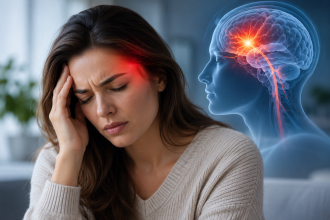
Migraine is a common neurological condition characterized by recurrent headache attacks that may be accompanied by nausea, sensitivity to light and sound, and other neurological symptoms. Migraine is more than simply a severe headache. It is a complex disorder of the nervous system that can significantly affect work, social life, sleep, and overall daily functioning. The frequency and severity of migraine attacks vary considerably from person to person. Some patients experience occasional attacks, while others may have very frequent episodes or develop chronic migraine. Accurate diagnosis and individualized treatment can reduce the frequency, duration, and severity of migraine attacks and limit their impact on everyday life.
Symptoms of Migraine
A typical migraine attack may last between 4 and 72 hours when not effectively treated.
The headache often has characteristics such as:
- pain on one side of the head, although it may also affect both sides
- throbbing or pulsating pain
- moderate to severe intensity
- worsening with routine physical activity, such as walking or climbing stairs
During an attack, patients may also experience:
- nausea
- vomiting
- sensitivity to light (photophobia)
- sensitivity to sound (phonophobia)
During a severe attack, many patients prefer to rest in a quiet, dark environment.
Phases of a Migraine Attack
A migraine attack may progress through several different phases, although not every patient experiences all of them.
Prodrome Phase
Hours or even days before the headache begins, some patients may notice changes such as:
- fatigue
- mood changes
- difficulty concentrating
- frequent yawning
- neck stiffness or discomfort
- changes in appetite
These symptoms are part of the migraine attack itself and may precede the headache phase.
Aura
Some patients experience a migraine aura before or during the headache. Aura consists of temporary and fully reversible neurological symptoms that usually develop gradually.
The most common type is visual aura, which may include:
- bright spots or flashes of light
- zigzag lines
- changes or loss of part of the visual field
Other symptoms may include:
- tingling or numbness, usually affecting the face or upper limb
- temporary difficulty speaking or using language
Symptoms of a typical aura are reversible and usually last from a few minutes to one hour.
Headache Phase
The headache may be accompanied by nausea, vomiting, photophobia, and phonophobia and may worsen with physical activity. Without effective treatment, an attack may last for several hours or even days.
Postdrome Phase
After the headache subsides, some patients may experience symptoms for several hours, including:
- fatigue
- difficulty concentrating
- reduced energy
- mood changes
Migraine Without Aura
Migraine without aura is the most common form of migraine. Attacks are characterized by the typical migraine headache and associated symptoms without the temporary neurological symptoms of aura occurring beforehand. Diagnosis is based primarily on the characteristics of the attacks and the patient's medical history.
Migraine With Aura
In migraine with aura, temporary neurological symptoms occur, usually before the headache, although they may also develop during it. In some cases, an aura may occur without a subsequent headache. New or unusual neurological symptoms require careful assessment, particularly when they occur for the first time, as certain other neurological conditions can cause similar symptoms.
Chronic Migraine
Migraine can also be classified as episodic or chronic, depending on the frequency of headache days. In chronic migraine, a patient experiences headache on 15 or more days per month for more than three months, with migraine features present on at least 8 days per month. Chronic migraine can significantly affect everyday life and usually requires an organized preventive treatment strategy.
Factors That May Be Associated With Migraine Attacks
Factors associated with the onset of migraine attacks vary considerably between patients.
For some people, they may include:
- changes in sleep patterns
- insufficient sleep
- skipping meals or prolonged fasting
- dehydration
- stress or changes following a period of intense stress
- hormonal changes
- alcohol
- certain foods in individual patients
- bright light, odors, or other sensory stimuli
Identifying a possible trigger does not necessarily mean that it must be strictly avoided. The aim is to recognize individual patterns associated with migraine attacks and develop a realistic management strategy.
Diagnosis of Migraine
The diagnosis of migraine is primarily clinical and is based on the patient's medical history, the characteristics of the attacks, and the neurological examination.
During the assessment, factors that may be considered include:
- age at which the headaches began
- frequency and duration of attacks
- location and characteristics of the pain
- associated symptoms
- presence or absence of aura
- factors associated with the onset of attacks
- use of analgesics and other medications
- family history of migraine
- impact of the attacks on daily functioning
In a patient with typical migraine symptoms and a normal neurological examination, brain imaging is not always required. However, when atypical features or other findings are present, further investigation may be necessary, including Magnetic Resonance Imaging (MRI) of the brain or other diagnostic tests.
Migraine Diary
Recording attacks in a migraine or headache diary can be very useful for both assessment and treatment.
The diary may record:
- headache days
- duration and severity of attacks
- associated symptoms
- presence of aura
- medication used
- response to treatment
- possible factors associated with the attack
A migraine diary can help assess attack frequency and evaluate the effectiveness of treatment.
Treatment of Migraine
Migraine treatment is individualized and depends on the frequency, duration, and severity of attacks, associated symptoms, other medical conditions, and the impact of migraine on everyday life.
The treatment approach may include:
- treatment of acute migraine attacks
- preventive treatment
- lifestyle adjustments
- identification and management of factors associated with attacks
The aim is to reduce the frequency and severity of attacks as effectively as possible and improve daily functioning.
Treatment of an Acute Migraine Attack
Acute migraine treatment is used when an attack begins, with the aim of providing rapid relief from headache and associated symptoms.
Depending on the individual patient and the severity of the attack, treatment options may include:
- simple analgesics
- non-steroidal anti-inflammatory drugs (NSAIDs)
- triptans
- gepants, in appropriate patients
- medications for nausea and vomiting
The choice of medication depends on the characteristics of the attacks, how rapidly they develop, previous treatments, and the patient's medical history. Excessively frequent use of certain acute migraine medications may contribute to the development of medication-overuse headache, and the frequency of medication use should therefore be assessed.
Preventive Treatment of Migraine
Preventive migraine treatment aims to reduce the frequency, duration, and severity of migraine attacks. It may be considered when attacks are frequent, cause significant disability, are not adequately controlled with acute treatment, or when other clinical reasons for prevention are present.
Available options include different classes of medications, such as:
- certain antiseizure medications
- certain medications used to treat high blood pressure
- certain antidepressants
- therapies targeting CGRP or the CGRP receptor
- other modern migraine-specific preventive treatments
Treatment is selected individually, taking into account the patient's migraine profile, coexisting medical conditions, previous treatments, and individual needs.
CGRP-Targeting Therapies
Calcitonin Gene-Related Peptide (CGRP) plays an important role in the mechanisms involved in migraine. Modern treatments targeting CGRP or its receptor have significantly expanded the therapeutic options available for migraine. These include monoclonal antibodies targeting CGRP or its receptor, as well as medications from the gepant class. Depending on the specific medication, these treatments may be used for migraine prevention, while certain gepants can also be used for the treatment of acute migraine attacks.
Botox for Chronic Migraine
OnabotulinumtoxinA (Botox) is one of the treatment options available for selected patients with chronic migraine. Treatment is administered according to a specific injection protocol involving predetermined areas of the head and neck and is repeated at defined intervals. Botox is not used as a general treatment for every form of migraine, and its indication is determined following neurological assessment.
Lifestyle and Prevention of Migraine Attacks
Maintaining consistency in daily habits can be an important part of overall migraine management.
General recommendations may include:
- maintaining a regular sleep schedule
- adequate hydration
- regular meals
- regular physical activity
- stress management
- limiting excessive caffeine consumption
- avoiding excessive use of analgesics
Lifestyle modifications are complementary to other treatments and should be adapted to the needs and characteristics of each patient.
Symptoms Requiring Immediate Medical Assessment
Not every severe headache is a migraine.
Immediate medical assessment is particularly important when there is:
- a sudden, extremely severe headache that reaches maximum intensity within a very short period
- a new headache accompanied by weakness, speech disturbance, loss of consciousness, or other persistent neurological symptoms
- headache associated with fever and severe neck stiffness
- headache following significant head trauma
- a major change in the patient's usual headache pattern
- a new or progressively worsening headache requiring further investigation
Medical assessment helps distinguish migraine from secondary headache disorders, which may require different and sometimes urgent treatment.
Individualized Migraine Management
There is no single treatment that is appropriate for every patient with migraine. Treatment selection is based on the frequency of attacks, number of headache days, severity of symptoms, presence of aura, response to previous treatments, and the patient's overall medical history. With modern therapeutic options, migraine management can be tailored much more specifically to the needs of each patient. Regular neurological follow-up allows treatment response to be evaluated, therapy to be adjusted when necessary, and a long-term strategy to be developed for better migraine control.