
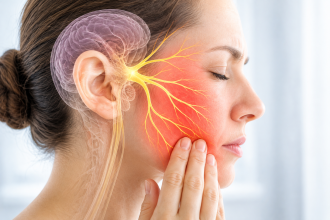
Trigeminal neuralgia is a neurological condition characterized by sudden episodes of severe neuropathic facial pain. The pain usually affects one side of the face, within the area supplied by the trigeminal nerve, and is often described as an electric shock, burning sensation, or sharp, stabbing pain. The trigeminal nerve is the fifth cranial nerve and is primarily responsible for transmitting sensation from the face to the brain. It has three main branches, which provide sensation to different areas of the face. Although each episode may last only a few seconds to approximately two minutes, attacks can occur repeatedly throughout the day and may significantly affect daily activities and quality of life.
Symptoms of Trigeminal Neuralgia
The most characteristic symptom is severe, sudden, and usually one-sided facial pain.
The pain may affect:
- the cheek
- the upper or lower jaw
- the lips
- the gums or teeth
- the area around the nose
- less commonly, the forehead or area around the eye
Patients often describe the pain as an electric shock, stabbing sensation, or sudden piercing pain. Attacks may occur several times a day for days, weeks, or months. In some patients, these periods are followed by remission, during which the pain significantly decreases or temporarily disappears. In certain forms of the condition, a more continuous burning or aching pain may also occur between the characteristic paroxysmal attacks.
Factors That Trigger Trigeminal Neuralgia Pain
A distinctive feature of trigeminal neuralgia is that even very mild stimulation of the face can trigger severe pain.
Common triggers include:
- touching the face
- chewing
- talking
- smiling
- brushing the teeth
- shaving or applying makeup
- washing the face
- eating or drinking
- cold air or wind
Some patients have specific areas of the face known as trigger zones, where even a light touch can provoke an attack.
Causes of Trigeminal Neuralgia
In many cases, classical trigeminal neuralgia is associated with contact or compression of the trigeminal nerve by a blood vessel near the point where the nerve enters the brainstem. Chronic compression may damage the myelin sheath surrounding the nerve and lead to abnormal transmission of nerve signals.
Trigeminal neuralgia may also be associated with:
- Multiple Sclerosis
- tumours or other lesions affecting the course of the trigeminal nerve
- other structural or neurological conditions
In some patients, no clear underlying cause can be identified. Investigating the possible cause is particularly important when symptoms develop at a younger age, affect both sides of the face, or are accompanied by other neurological abnormalities.
Diagnosis of Trigeminal Neuralgia
The diagnosis of trigeminal neuralgia is based primarily on the characteristic history of the pain and a neurological examination.
Particular attention is given to:
- the exact location of the pain
- the duration of each episode
- the character and intensity of the pain
- the frequency of attacks
- factors that trigger the pain
- the presence of numbness or other sensory disturbances
- the presence of other neurological symptoms
Accurate diagnosis is important because several other conditions can cause similar types of facial pain.
MRI in Trigeminal Neuralgia
A Brain Magnetic Resonance Imaging (MRI) scan is an important part of the investigation, particularly when looking for a possible secondary cause of trigeminal neuralgia.
MRI may help evaluate for:
- possible vascular contact or compression of the trigeminal nerve
- demyelinating lesions that may be associated with Multiple Sclerosis
- tumours or other structural lesions
- other pathological conditions affecting the course of the trigeminal nerve
Depending on the clinical situation, specialized MRI sequences may be used to provide more detailed imaging of the trigeminal nerve and the surrounding blood vessels.
Differential Diagnosis of Facial Pain
Not every episode of severe facial pain is caused by trigeminal neuralgia. Conditions that may produce similar symptoms include dental disorders, temporomandibular joint disorders, other cranial neuralgias, certain headache disorders, and other forms of neuropathic or facial pain. For this reason, an accurate description of the symptoms and appropriate clinical investigation are important before treatment is initiated.
Treatment of Trigeminal Neuralgia
The treatment of trigeminal neuralgia is individualized according to the frequency and severity of the attacks, the patient's age, the possible underlying cause, and the presence of other medical conditions. Medication is usually the first-line treatment. Commonly used medications include carbamazepine and oxcarbazepine, while other medications that modify nerve signal transmission may be considered in selected cases. Conventional painkillers are generally not particularly effective for the characteristic paroxysmal pain associated with trigeminal neuralgia. Regular follow-up is important to assess pain control, adjust medication dosage when necessary, and monitor for potential side effects.
Interventional and Surgical Treatment
When medication does not adequately control the pain, causes significant adverse effects, or becomes less effective over time, more specialized treatment options may be considered.
Depending on the underlying cause and individual patient characteristics, these may include:
- Microvascular Decompression (MVD)
- percutaneous procedures involving the trigeminal nerve
- radiofrequency thermocoagulation
- balloon compression
- glycerol injection
- stereotactic radiosurgery
The choice of the most appropriate procedure requires an individualized assessment of the potential benefits and risks.
Neurological Follow-Up for Trigeminal Neuralgia
Regular neurological follow-up is important for monitoring the progression of the condition and the response to treatment. New symptoms such as persistent facial numbness or loss of sensation, muscle weakness, visual or hearing disturbances, bilateral facial pain, or other neurological symptoms require further medical evaluation. Accurate diagnosis and individualized treatment of trigeminal neuralgia can significantly reduce the frequency and severity of painful attacks and contribute to improved daily functioning and quality of life.