
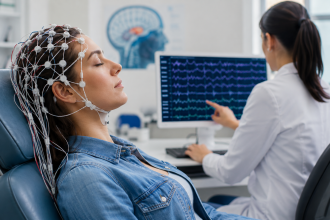
An Electroencephalogram (EEG) is a safe, painless, and non-invasive diagnostic test that records the brain's electrical activity using small electrodes placed on specific areas of the scalp.
It is one of the most important diagnostic tools in neurology, providing valuable information about brain function and assisting in the diagnosis and monitoring of a wide range of neurological disorders.
When is an Electroencephalogram Recommended?
An Electroencephalogram (EEG) is primarily used to diagnose and monitor epilepsy and epileptic seizures. It can also be valuable in the investigation of symptoms or conditions such as:
- Episodes of loss of consciousness or fainting
- Unexplained episodes of confusion or disorientation
- Altered levels of consciousness
- Sleep disorders
- Suspected nocturnal seizures
- Recurrent episodes of dizziness
- Certain types of headaches
- Assessment of brain function following a stroke
- Investigation of other neurological disorders when clinically indicated
EEG findings are always interpreted alongside the patient's medical history, neurological examination, and, when necessary, other imaging or laboratory investigations.
How Is the Examination Performed?
An Electroencephalogram is a completely painless and safe procedure that does not involve exposure to radiation.
At the beginning of the examination, small electrodes are placed on the scalp using a special conductive gel or paste. These electrodes do not deliver electrical current to the body; they simply record the brain's natural electrical activity.
During the recording, the patient remains relaxed while sitting or lying down.
At certain stages of the examination, the patient may be asked to:
- Close their eyes and remain relaxed.
- Take deep, rapid breaths (hyperventilation).
- Look at a flashing light that blinks at different frequencies (photic stimulation).
These procedures are entirely safe and help reveal electrical abnormalities that may not be present while the brain is at rest.
How Long Does an Electroencephalogram Take?
The examination typically lasts 30 to 60 minutes, depending on the clinical indication and the recording protocol being used.
Once the test is completed, patients can immediately return to their normal daily activities unless their physician advises otherwise.
What Are the Advantages of an Electroencephalogram?
An EEG is one of the most valuable diagnostic investigations in neurology because it is:
- Safe and non-invasive
- Painless and well tolerated by both adults and children
- Free from radiation exposure
- Highly effective in diagnosing epilepsy and other disorders affecting brain function
- Useful for diagnosis, monitoring disease progression, and evaluating treatment effectiveness
An Electroencephalogram (EEG) is a reliable, safe, and highly valuable diagnostic tool for assessing brain function. By recording the brain's electrical activity in real time, it plays a crucial role in diagnosing epilepsy, investigating neurological symptoms, and monitoring the progression of various neurological conditions.
If you experience episodes of loss of consciousness, seizures, unexplained dizziness, sleep disturbances, or other neurological symptoms, early neurological assessment and an Electroencephalogram —when clinically indicated—can contribute to an accurate diagnosis and the selection of the most appropriate treatment plan.