
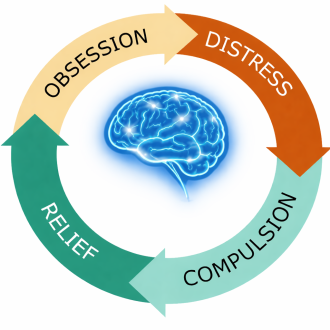
Obsessive-Compulsive Disorder (OCD) is often understood as a condition of intrusive thoughts and repetitive behaviors. However, beyond cognition and behavior, OCD is deeply connected to the body and the nervous system. Many individuals with OCD experience chronic tension, restlessness, internal pressure, urges, and a persistent sense of “something not being right” within their bodies.
Body Psychotherapy offers a somatic, integrative approach that works directly with bodily sensations, emotional regulation, and nervous system patterns, supporting recovery from OCD in a grounded and embodied way.
Understanding Obsessive-Compulsive Disorder (OCD) as a Somatic and Nervous System Condition
Obsessive-Compulsive Disorder (OCD) is commonly characterized by:
- intrusive, unwanted thoughts (obsessions)
- repetitive behaviors or mental rituals (compulsions)
- heightened anxiety and inner tension
From a body-oriented perspective, OCD can be understood as a state of chronic nervous system dysregulation. The body remains stuck in heightened alertness, constantly attempting to prevent perceived danger or discomfort. Compulsions often emerge as somatic strategies to regulate unbearable internal tension, rather than purely cognitive habits.
Common somatic features of OCD include:
- Persistent muscle tension or rigidity
- Internal pressure, urgency, or restlessness
- Shallow or restricted breathing
- Tightness in the chest, jaw, or abdomen
- Difficulty tolerating uncertainty or bodily sensations
- Strong urges to “neutralize” discomfort through action
Body Psychotherapy addresses these patterns at their root — within the body and nervous system.
What Is Body Psychotherapy?
Body Psychotherapy is a holistic therapeutic approach that integrates somatic awareness, emotional processing, and psychotherapeutic dialogue. It is grounded in neuroscience, attachment theory, and trauma-informed care.
Rather than focusing solely on controlling thoughts or resisting behaviors, Body Psychotherapy helps individuals learn to stay present with bodily sensations, regulate internal states, and develop a felt sense of safety and self-support.
The body is viewed as an ally — not a problem to be controlled — and as a key gateway to lasting change.
How Body Psychotherapy Helps in Obsessive-Compulsive Disorder (OCD) Treatment
Regulating the Nervous System
Obsessive-Compulsive Disorder (OCD) is often driven by chronic hyperarousal. Body-based techniques activate parasympathetic pathways, helping the nervous system shift out of constant alarm and into greater balance.
Increasing Tolerance for Bodily Sensations
Compulsions are frequently attempts to escape uncomfortable sensations. Body Psychotherapy gently expands the capacity to stay with sensations without acting on them, reducing compulsive urgency over time.
Reducing Somatic Anxiety and Inner Pressure
Through breathwork, grounding, and movement, bodily tension is gradually released, decreasing the physical fuel that drives obsessive-compulsive cycles.
Restoring a Sense of Internal Control
Rather than relying on rituals, clients develop embodied self-regulation skills, experiencing that they can soothe and stabilize themselves from within.
Working with Urges Without Suppression
Body Psychotherapy does not force suppression of compulsions. Instead, it supports mindful awareness of urges, helping them rise and fall naturally without automatic action.
Common Somatic Techniques Used in Obsessive-Compulsive Disorder (OCD) Treatment
- Grounding and centering practices
- Breathwork to reduce internal pressure and anxiety
- Body scans and interoceptive awareness
- Working with impulse and urge sensations safely
- Movement to discharge tension and restore flow
- Somatic dialogue around control, safety, and uncertainty
- Voice and sound work to release held tension
Integration with Other Forms of Treatment
Body Psychotherapy can be effectively combined with:
- Cognitive-Behavioral Therapy (CBT)
- Pharmacological treatment (when indicated)
- Mindfulness-based approaches
- Trauma-informed psychotherapy
This integrative model ensures that both cognitive patterns and bodily regulation are addressed, enhancing treatment effectiveness and long-term stability.
A Gentle and Embodied Path Toward Freedom
Obsessive-Compulsive Disorder (OCD) is not only a disorder of thoughts — it is also lived in the breath, the muscles, the nervous system, and the body’s need for safety and certainty.
Body Psychotherapy offers a compassionate, non-pathologizing approach that helps individuals reconnect with their bodies, soften internal pressure, and develop resilience from the inside out.
By learning to listen to the body rather than fight it, individuals can gradually loosen the grip of compulsions, increase tolerance for uncertainty, and move toward a more flexible, grounded, and embodied life.