
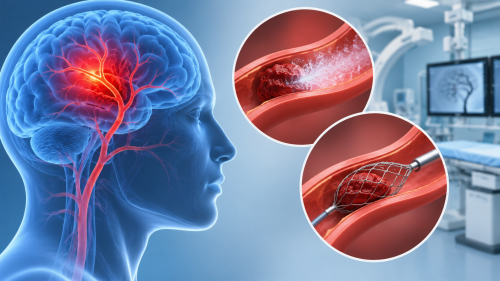
Stroke is one of the leading causes of death and long-term disability worldwide. However, modern medicine now offers effective treatments that can significantly reduce brain damage and improve the chances of recovery. Two of the most important treatments are intravenous thrombolysis and mechanical thrombectomy. These are emergency treatments used in selected patients with ischemic stroke. Early recognition of symptoms and immediate transfer to a hospital can play a decisive role in a patient's outcome.
What is an Ischemic Stroke?
An ischemic stroke occurs when a blood vessel supplying the brain becomes blocked, usually by a blood clot. This blockage prevents oxygen and essential nutrients from reaching brain cells, resulting in damage to brain tissue. The longer blood circulation remains interrupted, the greater the risk of permanent neurological damage. For this reason, the phrase "Time is Brain" is frequently used in stroke management. It is important to distinguish ischemic stroke from hemorrhagic stroke, which occurs when a blood vessel ruptures and causes bleeding in the brain. Thrombolysis and mechanical thrombectomy are treatments designed to restore blood flow in specific cases of ischemic stroke.
What Is Thrombolysis?
Thrombolysis is a medical treatment designed to dissolve the blood clot that is preventing normal blood circulation in the brain. The treatment involves the intravenous administration of specialized medications, such as alteplase or tenecteplase, depending on the clinical indications and available treatment protocols. These medications activate the body's natural mechanisms for breaking down blood clots, helping to restore blood flow to the affected area of the brain.
When Can Thrombolysis Be Performed?
Intravenous thrombolysis is usually administered within the first 4.5 hours after the onset of ischemic stroke symptoms. In certain cases, treatment may also be considered beyond this time window if specialized brain imaging demonstrates that there is still brain tissue that can potentially be saved.
Before treatment, an emergency medical assessment is required, including:
- Neurological examination.
- Brain CT or MRI scan.
- Assessment of blood pressure and blood glucose levels.
- Evaluation of bleeding risks and possible contraindications.
What Are the Benefits of Thrombolysis?
Early thrombolysis can increase the likelihood of a good functional recovery and reduce the risk of long-term disability. However, thrombolysis is not suitable for every patient. Its most significant potential complication is bleeding, including intracranial hemorrhage. Therefore, careful patient selection and close medical monitoring are essential.
What Is Mechanical Thrombectomy?
Mechanical thrombectomy is a specialized minimally invasive procedure in which a blood clot is physically removed from a blocked blood vessel in the brain. Unlike thrombolysis, which uses medication to dissolve the clot, mechanical thrombectomy allows the clot to be removed directly using specialized endovascular devices. The procedure is performed by a highly trained medical team in a hospital equipped with the necessary facilities.
How Is Mechanical Thrombectomy Performed?
During the procedure, a physician inserts a thin catheter into an artery, usually through the groin or wrist. Using X-ray guidance, the catheter is carefully advanced through the blood vessels until it reaches the site of the blockage in the brain. Specialized devices, such as stent retrievers or aspiration systems, are then used to remove the blood clot. The goal is to restore blood circulation to the affected brain region as quickly as possible.
When Can Mechanical Thrombectomy Be Performed?
Mechanical thrombectomy is primarily used in patients with a blockage of a large blood vessel in the brain. The treatment is particularly effective when performed within the first 6 hours after the onset of stroke symptoms. However, in carefully selected patients, mechanical thrombectomy may be performed up to 24 hours after symptom onset, depending on the location of the blockage, the patient's clinical condition, and the results of specialized brain imaging. This is particularly important for patients who wake up with stroke symptoms or arrive at the hospital several hours after the stroke began. The possibility of treatment up to 24 hours does not mean that medical attention should be delayed. In general, the sooner blood flow is restored, the greater the chances of a better outcome.
What Is the Difference Between Thrombolysis and Thrombectomy?
Although thrombolysis and mechanical thrombectomy share the same primary goal—restoring blood circulation to the brain—they differ in how they are performed. Thrombolysis is a medication-based treatment in which a specialized drug is administered intravenously to help dissolve the blood clot. It is usually performed within the first 4.5 hours after symptom onset, although in selected cases it may be used later based on specific brain imaging criteria. It does not require catheterization and may be used in various types of ischemic stroke. In contrast, mechanical thrombectomy is a specialized endovascular procedure in which the blood clot is physically removed using specially designed catheters. It is primarily used in patients with large vessel occlusion and, in appropriately selected cases, may be performed up to 24 hours after the onset of symptoms. In some patients, both treatments can be combined. For example, a patient may initially receive intravenous thrombolysis and subsequently undergo mechanical thrombectomy when clinically indicated. When both treatments are appropriate, administering thrombolysis should not delay the preparation or performance of mechanical thrombectomy. In both cases, time is critical. The sooner blood circulation is restored to the brain, the greater the chances of limiting brain damage and achieving a better neurological recovery.
How can we recognize a stroke?
Early recognition of stroke symptoms is the first and most important step toward effective treatment.
Symptoms usually appear suddenly and may include:
- Weakness or numbness in the face, arm, or leg, particularly on one side of the body.
- Difficulty speaking, articulating words, or understanding speech.
- Facial asymmetry, such as drooping of one side of the mouth.
- Sudden loss of vision or visual disturbances.
- Sudden dizziness, loss of balance, or difficulty walking.
- A sudden, extremely severe headache, especially if it is different from previous headaches.
An easy way to remember the warning signs of stroke is the acronym BE-FAST:
- B – Balance: Sudden loss of balance or coordination.
- E – Eyes: Sudden vision problems.
- F – Face: Facial drooping or asymmetry.
- A – Arms: Weakness in one arm.
- S – Speech: Difficulty speaking or understanding speech.
- T – Time: Seek emergency medical assistance immediately.
If any of these symptoms occur, call 112 immediately in Cyprus and request an ambulance. Do not wait for symptoms to disappear, and avoid transporting the patient to the hospital yourself when emergency ambulance services are available.
What Happens After Thrombolysis or Thrombectomy?
Restoring blood circulation is only the first stage of stroke treatment. Following emergency treatment, the patient requires close medical monitoring, usually in a specialized stroke unit. Further care includes identifying the underlying cause of the stroke, preventing future strokes, and managing potential neurological complications. Depending on the patient's condition, rehabilitation may include physiotherapy, occupational therapy, speech therapy, and neuropsychological support. Ongoing neurological follow-up is particularly important for assessing recovery and planning long-term treatment.
Can a Patient Recover Completely After a Stroke?
Complete recovery is possible for some patients, but it cannot be guaranteed.
The prognosis depends on several factors, including:
- The size and location of the brain injury.
- The severity of the initial symptoms.
- The time between symptom onset and treatment.
- The success of restoring blood flow.
- The patient's age and overall health.
- The early initiation and continuation of rehabilitation.
Modern treatments aimed at restoring blood circulation have significantly improved outcomes for many patients with ischemic stroke.
Every Minute Counts
Thrombolysis and mechanical thrombectomy represent two of the most important advances in the modern treatment of ischemic stroke. Thanks to these treatments, many patients now have a greater chance of surviving without severe disability and returning to their daily activities. The most important message is that stroke is a medical emergency. Recognizing symptoms immediately, ensuring rapid transfer to an appropriately equipped hospital, and receiving timely treatment can make a life-changing difference. When it comes to stroke, every minute counts.