
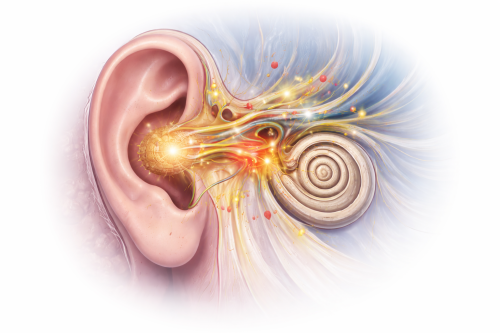
Hearing loss is commonly linked to ear-related problems, such as infections or aging. However, in many cases, the underlying cause is neurological, involving the brain, auditory nerve, or central nervous system.
Understanding the neurological causes of hearing loss is essential for early diagnosis, especially when symptoms are sudden, progressive, or associated with other neurological signs.
In this article, we explore the 7 most important neurological causes of hearing loss, their symptoms, and when to seek medical attention.
What Is Neurological Hearing Loss?
Neurological hearing loss occurs when there is a problem not in the ear itself, but in the auditory pathways of the nervous system, including:
- The auditory nerve
- The brainstem
- The auditory cortex
In these cases, patients may either not hear sounds properly or struggle to interpret them, even if basic hearing tests appear normal.
1. Acoustic Neuroma (Vestibular Schwannoma)
An acoustic neuroma is a benign tumor of the auditory nerve and one of the most important causes of unilateral hearing loss.
Symptoms:
- Gradual hearing loss in one ear
- Tinnitus (ringing)
- Balance problems
2. Stroke and sudden hearing loss
A stroke affecting the brainstem or auditory pathways can lead to sudden hearing loss, which is a medical emergency.
Symptoms:
- Sudden hearing loss
- Vertigo or dizziness
- Difficulty speaking or weakness
Sudden hearing loss accompanied by neurological symptoms requires immediate medical evaluation.
3. Multiple Sclerosis and hearing problems
Multiple sclerosis can affect the central nervous system, including auditory pathways.
Symptoms:
- Fluctuating hearing loss
- Difficulty understanding speech
- Other neurological signs (vision problems, numbness)
4. Meningitis and permanent hearing loss
Meningitis is a serious infection that can damage the inner ear and auditory nerve.
Symptoms:
- Rapid hearing loss
- Fever
- Neck stiffness
This is one of the leading causes of permanent hearing loss, especially if not treated early.
5. Traumatic Brain Injury (TBI)
Head trauma can disrupt auditory pathways or affect brain regions responsible for sound processing.
Symptoms:
- Hearing loss after injury
- Tinnitus
- Difficulty understanding sounds
Even mild traumatic brain injury can lead to long-term auditory dysfunction.
6. Central Auditory Processing Disorder (CAPD)
In some patients, hearing tests are normal, but the brain cannot process sound correctly.
Symptoms:
- Difficulty understanding speech in noisy environments
- Trouble following conversations
- Normal hearing on audiometry
7. Neurodegenerative Diseases
Conditions such as Alzheimer’s disease and Parkinson’s disease can affect how the brain processes sound.
Symptoms:
- Difficulty interpreting speech
- Slower auditory processing
- Association with cognitive decline
In these cases, the problem lies in processing rather than hearing itself.
When should you see a Neurologist?
You should seek medical attention if you experience:
- Sudden hearing loss
- Hearing loss in one ear
- Hearing problems with dizziness or imbalance
- Hearing loss with neurological symptoms (weakness, vision changes, confusion)
Early diagnosis is crucial to prevent permanent damage and improve treatment outcomes.
Diagnosis of Neurological Hearing Loss
A proper evaluation may include:
- Neurological examination
- MRI of the brain
- Audiological testing
- Assessment of central auditory processing
A combined neurological and audiological approach ensures accurate diagnosis.
Neurological causes of hearing loss are often overlooked but can be serious. From tumors and stroke to multiple sclerosis and neurodegenerative diseases, the nervous system plays a critical role in hearing.
Recognizing the warning signs early allows for timely diagnosis and more effective treatment. If hearing loss is sudden, unilateral, or associated with other neurological symptoms, further evaluation is essential.