
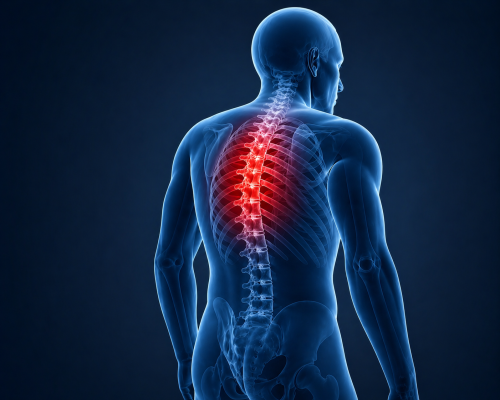
Kyphosis is often perceived as a simple postural change—a rounding of the upper back that becomes more visible with age. However, from a neurological perspective, kyphosis can have deeper implications. In certain cases, it may contribute to significant neurological complications that affect movement, sensation, and overall quality of life.
Understanding this connection is essential for early diagnosis and effective treatment.
What Is Kyphosis?
Kyphosis refers to an excessive forward curvature of the thoracic spine (upper back). While a mild curve is normal, a pronounced curvature leads to a hunched posture.
Common causes include:
- Age-related degenerative changes (especially osteoporosis and vertebral fractures)
- Long-standing poor posture
- Congenital spinal abnormalities
- Scheuermann’s disease (A developmental disorder of the spine during adolescence that leads to permanent increased kyphosis due to abnormal growth of the vertebrae).
- Neuromuscular disorders (e.g., Parkinson’s disease)
How Kyphosis Affects the Nervous System
Kyphosis becomes clinically significant when it starts to affect the spinal cord, nerve roots, or overall neurological function.
1. Spinal Cord Compression (Myelopathy)
In more severe cases, the curvature of the spine can narrow the spinal canal and compress the spinal cord.
Possible symptoms include:
- Weakness in the legs
- Difficulty walking or maintaining balance
- Increased muscle stiffness (spasticity)
- Reduced coordination
- In advanced stages, bladder or bowel dysfunction
This condition, known as thoracic myelopathy, requires prompt neurological evaluation.
2. Nerve Root Compression (Radiculopathy)
Kyphotic changes can also place pressure on nerve roots as they exit the spine.
Typical symptoms:
- Sharp, burning, or radiating pain in the back or chest
- Pain spreading along the ribs
- Numbness or tingling
Thoracic radiculopathy can be overlooked, as symptoms may mimic cardiac or gastrointestinal conditions.
3. Balance and Gait Disturbances
Kyphosis shifts the center of gravity forward, forcing the nervous system to constantly compensate.
This may lead to:
- Impaired balance
- Increased risk of falls
- Slower and less stable walking
- Reduced confidence in movement
In elderly patients, these changes significantly increase the risk of injury and loss of independence.
4. Respiratory Function and Brain Oxygenation
Severe kyphosis can limit chest expansion, reducing lung capacity.
Over time, this may contribute to:
- Chronic fatigue
- Reduced oxygen supply to the brain
- Potential worsening of cognitive function in vulnerable individuals
Although subtle, this effect is clinically relevant, particularly in older adults.
5. Chronic Pain and Central Sensitization
Ongoing mechanical stress on the spine can lead to chronic pain. With time, the nervous system may become more sensitive, amplifying pain signals.
Patients may experience:
- Persistent or widespread pain
- Increased sensitivity to movement
- Reduced tolerance to physical activity
This creates a cycle where posture, pain, and neurological responses reinforce each other.
When Should You Seek Medical Advice?
Kyphosis should be evaluated by a specialist if it is associated with:
- Progressive weakness
- Numbness or tingling
- Difficulty walking or frequent falls
- Loss of bladder or bowel control
- Persistent or worsening pain
These signs may indicate neurological involvement requiring further investigation.
Diagnosis
A comprehensive evaluation typically includes:
- Detailed neurological examination
- MRI of the spine to assess spinal cord and nerve involvement
- X-rays for structural assessment
- Electrophysiological studies when necessary
Treatment Options
Treatment depends on the severity and underlying cause.
Conservative management:
- Physiotherapy focused on posture correction
- Strengthening of back and core muscles
- Pain management strategies
- Treatment of underlying osteoporosis
Medical and interventional approaches:
- Medications for neuropathic pain
- Neuromodulation techniques in selected cases
Surgical treatment:
In cases of significant spinal cord compression or progressive neurological deficits, surgical intervention may be required to decompress and stabilize the spine.
Kyphosis is not just a structural issue—it can directly influence the nervous system. Early recognition of neurological symptoms allows timely intervention and helps prevent long-term complications.
A multidisciplinary approach combining neurology, physiotherapy, and rehabilitation offers the best outcomes for patients.
Kyphosis is a common condition, especially with aging, but its potential neurological impact should not be underestimated. When symptoms extend beyond posture—affecting movement, sensation, or balance—it becomes a condition that requires careful neurological evaluation.
Early diagnosis and appropriate management can significantly improve quality of life and help maintain independence.