
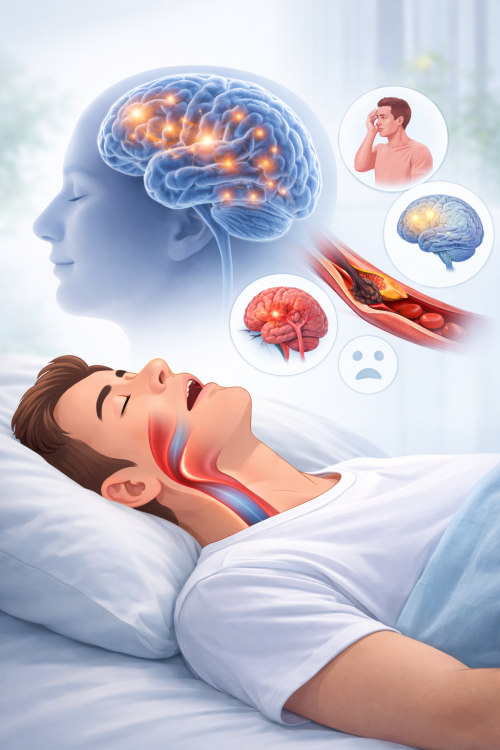
Obstructive Sleep Apnea (OSA) is widely known for causing loud snoring and daytime fatigue. However, many people — including patients with neurological symptoms — are unaware that untreated Obstructive Sleep Apnea can significantly affect the brain and nervous system.
Research over the past decade has clearly shown that obstructive sleep apnea is associated with cognitive decline, stroke risk, mood disturbances, headaches, and even neurodegenerative processes. Early recognition and treatment are essential for protecting long-term brain health.
What Is Obstructive Sleep Apnea?
Obstructive Sleep Apnea is a sleep-related breathing disorder in which the upper airway repeatedly collapses during sleep. This leads to:
- Recurrent pauses in breathing (apneas and hypopneas)
- Intermittent drops in blood oxygen
- Frequent micro-arousals
- Fragmented, non-restorative sleep
These repeated physiological stresses can have cumulative neurological consequences.
How Obstructive Sleep Apnea Affects the Brain
The neurological impact of Obstructive Sleep Apnea is mainly driven by three key mechanisms.
Intermittent Hypoxia
During apnea episodes, oxygen delivery to the brain decreases. Over time, intermittent hypoxia may:
- Promote oxidative stress
- Trigger neuroinflammation
- Damage vulnerable brain regions (especially hippocampus and frontal lobes)
- Impair neuronal metabolism
Even mild chronic oxygen fluctuations can affect cognitive performance.
Sleep Fragmentation
Obstructive Sleep Apnea repeatedly disrupts normal sleep architecture, particularly:
- Deep slow-wave sleep
- REM sleep
These stages are essential for:
- Memory consolidation
- Emotional regulation
- Synaptic restoration
- Glymphatic clearance of brain toxins
Chronic sleep fragmentation can therefore produce measurable neurocognitive symptoms.
Vascular and Autonomic Stress
Obstructive sleep apnea increases sympathetic activation and cardiovascular strain, leading to:
- Blood pressure surges
- Endothelial dysfunction
- Increased risk of cerebrovascular disease
This vascular burden is a major pathway linking Obstructive Sleep Apnea with stroke and cognitive decline.
Common Neurologic Complications of Obstructive Sleep Apnea
Cognitive Impairment
One of the most frequent neurological effects of Obstructive Sleep Apnea is cognitive dysfunction. Patients may experience:
- Poor concentration
- Memory problems
- Slowed thinking
- Executive dysfunction
- Mental fatigue
In middle-aged and older adults, untreated sleep apnea may mimic mild cognitive impairment.
Increased Risk of Stroke
Obstructive sleep apnea is now recognized as an independent risk factor for stroke.
Obstructive Sleep Apnea contributes to stroke risk through:
- Hypertension
- Atrial fibrillation
- Hypercoagulability
- Endothelial dysfunction
- Nocturnal blood pressure surges
Importantly, untreated Obstructive Sleep Apnea is also associated with worse stroke recovery and higher recurrence rates.
Morning Headaches
Many individuals with Obstructive Sleep Apnea report:
- Morning pressure-type headaches
- Chronic daily headache
- Non-specific head discomfort upon waking
These headaches are thought to result from nocturnal hypoxia, hypercapnia, and sleep disruption. In patients with treatment-resistant headaches, evaluation for sleep apnea is strongly recommended.
Mood and Psychiatric Symptoms
Obstructive sleep apnea frequently overlaps with psychiatric manifestations such as:
- Depression
- Anxiety
- Irritability
- Emotional instability
- Reduced stress tolerance
Sleep disruption and oxygen fluctuations affect limbic system regulation and neurotransmitter balance, contributing to these symptoms.
Neurodegenerative Risk
Emerging evidence suggests that untreated Obstructive Sleep Apnea may increase the risk of:
- Mild cognitive impairment
- Alzheimer’s disease
- Parkinsonian features
Proposed mechanisms include:
- Impaired glymphatic clearance of beta-amyloid
- Chronic neuroinflammation
- Vascular injury
- Oxidative stress
While research is ongoing, sleep apnea is increasingly viewed as a modifiable risk factor for cognitive decline.
Epilepsy and Seizure Control
Sleep apnea can negatively influence seizure disorders by:
- Lowering seizure threshold
- Increasing nocturnal seizures
- Reducing effectiveness of antiepileptic therapy
Screening for Obstructive Sleep Apnea is particularly important in patients with refractory epilepsy.
When to Suspect Obstructive Sleep Apnea
Consider evaluation for Obstructive Sleep Apnea when the following are present:
- Loud habitual snoring
- Witnessed apneas
- Excessive daytime sleepiness
- Morning headaches
- Cognitive complaints
- Treatment-resistant depression or anxiety
- Resistant hypertension
- Atrial fibrillation
- Obesity or large neck circumference
Early detection significantly improves outcomes.
How Obstructive Sleep Apnea is Diagnosed
The gold standard diagnostic test is polysomnography (sleep study), which evaluates:
- Apnea–Hypopnea Index (AHI)
- Oxygen desaturation
- Sleep stages
- Arousals
Treatment and Neurological Benefits
Effective treatment of obstructive sleep apnea can lead to meaningful neurological improvement.
CPAP Therapy
Continuous Positive Airway Pressure (CPAP) is the first-line treatment and has been shown to:
- Improve cognitive function
- Reduce morning headaches
- Stabilize mood
- Lower stroke risk
- Improve seizure control
Depending on the patient, management may also include:
- Weight reduction
- Oral mandibular advancement devices
- Positional therapy
- Treatment of nasal obstruction
- Optimization of sleep hygiene
Obstructive Sleep Apnea is not merely a sleep disorder — it is a significant neurological and systemic risk factor. Early recognition and proper treatment can protect brain function, improve quality of life, and reduce the risk of serious neurological complications.
If symptoms of sleep apnea are present, timely evaluation is strongly recommended.