
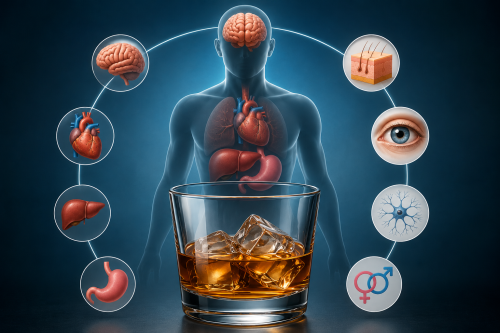
Alcohol is part of everyday life for many people, whether in social situations or as a way to relax. However, excessive or regular consumption can affect almost every organ in the body — from the brain and heart to the liver, skin, and fertility.
How is alcohol absorbed by the body?
Alcohol is quickly absorbed through the stomach and small intestine and then enters the bloodstream. From there, it reaches the liver, brain, heart, muscles, and other tissues. The body cannot store alcohol, so it constantly works to metabolize and eliminate it.
The speed at which the body processes alcohol depends on:
- Sex
- Body weight
- Age
- General health condition
- The amount and frequency of alcohol consumption
Why does alcohol affect women and men differently?
Women often have higher blood alcohol levels than men after consuming the same amount of alcohol. This happens because women generally have less body water and a different alcohol metabolism. In addition, women appear to have lower levels of the enzyme ADH- alcohol dehydrogenase, which helps break down alcohol in the liver and stomach.
Effects of alcohol on the skin and appearance
Excessive alcohol consumption can visibly affect physical appearance:
- Skin dehydration
- Dull-looking skin
- Dilated blood vessels on the face
- Red veins on the nose and cheeks
- Strong bad breath
Alcohol acts as a diuretic, increasing fluid loss from the body and contributing to dehydration.
Alcohol and vision
Drinking large amounts of alcohol directly affects vision and perception:
- Blurred vision
- Difficulty judging distances
- Reduced reflexes
- Red and irritated eyes
This is one of the main reasons why road traffic accidents increase under the influence of alcohol.
How does alcohol affect the stomach and intestines?
Alcohol irritates the gastrointestinal system and may cause:
- Nausea
- Abdominal pain
- Cramps
- Diarrhea
- Gastritis
Eating food before or during alcohol consumption slows its absorption into the bloodstream.
Alcohol and the heart: Are there risks?
Regular and excessive alcohol consumption increases the risk of:
- High blood pressure
- Stroke
- Heart failure
- Arrhythmias
- Heart attack
Although some studies suggest that very moderate alcohol consumption may have a cardioprotective effect in certain age groups, excessive drinking significantly burdens the cardiovascular system.
Special caution is needed when there is:
- High blood pressure
- Heart disease
- Medication use
In these cases, medical advice is essential.
The effects of alcohol on the liver
The liver is the main organ responsible for metabolizing alcohol. However, excessive alcohol consumption can lead to serious liver damage.
Common liver diseases caused by alcohol
Fatty Liver Disease
This is the accumulation of fat in the liver and is often reversible when alcohol consumption is stopped.
Alcoholic Hepatitis
This is inflammation of the liver, which may range from mild to severe.
Liver Cirrhosis
This is permanent damage in which normal liver tissue is replaced by scar tissue, seriously affecting liver function.
Long-term alcohol consumption is also linked to an increased risk of liver cancer and other types of cancer.
Effects of alcohol on the brain and nervous system
Alcohol acts as a depressant of the central nervous system. Although it may initially create a feeling of relaxation or euphoria, it later negatively affects:
- Concentration
- Memory
- Judgment
- Coordination of movements
- Emotional stability
Chronic alcohol consumption can cause cognitive impairment and damage to brain cells.
Alcohol and sleep
Alcohol affects REM sleep, the most important stage of sleep for rest and brain recovery. Although some people feel sleepy after drinking, the quality of sleep becomes significantly worse.
Alcohol, fertility, and pregnancy
In Women
Frequent alcohol consumption may:
- Affect the menstrual cycle
- Reduce fertility
- Increase the risk of miscarriage
- Affect fetal development during pregnancy
In Men
Alcohol may:
- Reduce testosterone
- Affect sperm quality and quantity
- Cause erectile problems
- Affect sexual function
The effect of alcohol on the body is much more extensive than many people believe. From the brain and heart to the liver, sleep, and fertility, excessive consumption can have serious consequences for both physical and mental health. Responsible drinking, proper information, and seeking help early when there is difficulty controlling alcohol use are important steps in protecting health.