
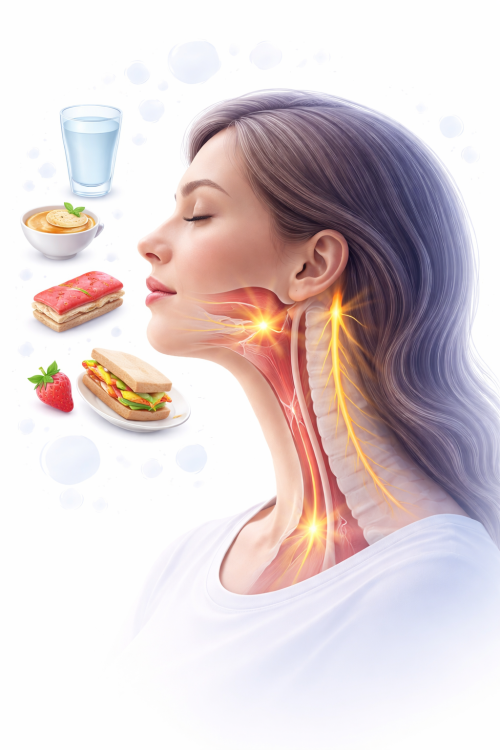
Dysphagia, meaning difficulty in swallowing, is a symptom that many people attribute to problems of the throat or esophagus. However, swallowing is a complex process that is largely controlled by the nervous system.
In many cases, the cause of dysphagia is neurological, and early recognition is particularly important to prevent complications.
How does swallowing work?
Swallowing is not a simple mechanical action. It is a coordinated process that involves:
- The brain
- The cranial nerves
- The muscles of the mouth, pharynx, and esophagus
This process is divided into three phases:
- Oral phase: food is prepared and pushed backward
- Pharyngeal phase: the swallowing reflex is triggered
- Esophageal phase: food is transported to the stomach
Any disruption in the control of these phases can lead to dysphagia.
Neurological causes of Dysphagia
Stroke
Stroke is one of the most common causes of dysphagia. When areas of the brain that control swallowing are affected, the process becomes impaired. Patients may experience difficulty initiating swallowing, coughing,eating, or a sensation that food is “stuck.”
Parkinson’s Disease
In Parkinson’s disease, dysphagia often appears in more advanced stages, but it may begin earlier. Reduced mobility and poor muscle coordination lead to slow and inefficient swallowing.
Multiple Sclerosis
Multiple sclerosis can affect the nerves responsible for swallowing. This leads to impaired muscle coordination and an increased risk of aspiration (food entering the airways).
Neuromuscular Disorders
Conditions that affect the connection between nerves and muscles can cause dysphagia. In these cases, the muscles involved in swallowing are weak or fatigue easily, leading to difficulty swallowing both solids and liquids.
Dementia and Neurodegenerative Disorders
In patients with dementia, dysphagia may occur due to impaired coordination and reduced awareness of the swallowing process. This increases the risk of malnutrition and aspiration.
Cranial Nerve Damage
Cranial nerves play a key role in swallowing. Damage due to trauma, tumors, or infections can lead to dysphagia, affecting specific stages of the swallowing process.
When Should You Be Concerned?
Dysphagia should not be ignored, especially when:
- It appears suddenly
- It is accompanied by coughing or choking during swallowing
- There is weight loss
- Neurological symptoms are present (weakness, speech difficulties)
- There is frequent aspiration or respiratory infections
How Is the Medical Evaluation Performed?
The evaluation may include:
- Neurological examination
- Specialized swallowing tests
- Imaging studies (such as MRI)
- In some cases, endoscopic evaluation
The goal is to identify the underlying cause and determine the appropriate treatment.
Dysphagia is not always harmless and may be associated with neurological disorders. Early diagnosis is essential to prevent serious complications such as aspiration and malnutrition.
If you notice persistent or worsening difficulty in swallowing, it is important to seek medical attention.