
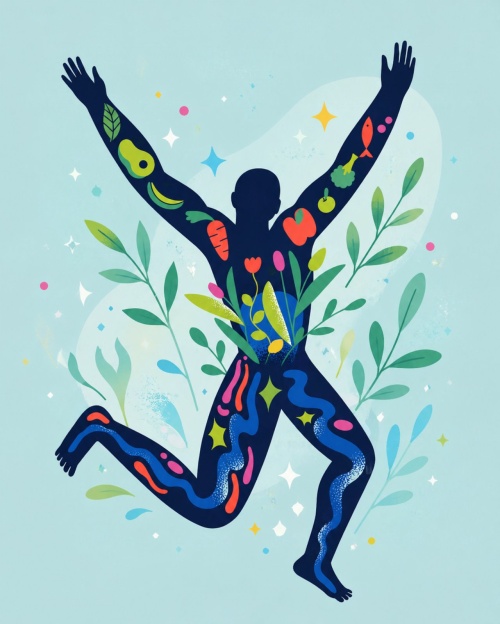
For many years, depression was viewed mainly as a “chemical imbalance” in the brain. Today, however, science offers a deeper understanding. Three of the most important theories—those of neurotransmitters, neuroplasticity, and inflammation—show that depression is a much more complex process.
What unites them, however, is one important idea:
depression is not only in the mind—it is a condition of the entire organism, including the body.
And this is exactly where body-oriented therapy comes in.
What Actually Happens in Depression
In depression, the body appears to enter a state of “energy conservation”:
- serotonin and dopamine levels change
- the brain loses part of its ability to form new connections
- the body is often in a state of chronic tension or “freeze”
- inflammatory processes become activated
This leads to familiar feelings: lack of energy, withdrawal, suppressed emotions, and a sense of disconnection from oneself and the world.
In other words, depression is a state of suppression—of life, of energy, of the innate drive to seek and experience pleasure from ourselves, our bodies, and the world around us.
Expression as the Opposite of Depression
If depression is suppression, then its natural counterforce is expression. This includes:
- movement
- emotional expression through voice
- breathing
- connection
- following inner desires and impulses
- putting the self (“I”) first—which is often very difficult for many people
This is not just a psychological idea — it is a biological process.
When a person begins to express themselves:
- the nervous system is activated in a healthy way
- blocked emotions begin to release, and stagnant processes give way to newly mobilized energy
- the brain starts forming new connections (neuroplasticity)
- internal tension and inflammatory responses decrease
How Body-Oriented Therapy Helps with Depression
Body-oriented psychotherapy works directly with what depression “shuts down”—the body. It does not begin with thoughts, but with inner sensations and sensory experience.
1. Restoring Contact with the Body
Many people with depression experience their bodies as:
- heavy
- rigid
- “switched off”
Through awareness of the body, connection is restored with:
- breathing
- muscle tone
- internal sensations
2. Releasing Suppressed Emotions
Suppressed emotions do not disappear—they remain stored in the body, in the muscles, forming blockages that disconnect the body and prevent life energy from flowing freely. As a result, expression diminishes.
Body therapy creates space for:
- expressing sadness
- releasing anger
- emerging from internal “freeze”
This may happen through:
- movement
- sound
- spontaneous bodily reactions
3. Activating Life Energy
Depression often feels like a lack of energy. But in many cases, this is not absence—it is blocked energy.
When the body begins to move and express:
- energy is released
- a sense of aliveness appears
- motivation returns
4. Supporting Brain Plasticity
Modern research shows that new experience changes the brain - movement and emotional expression stimulate neuroplasticity
Body therapy creates exactly this kind of new experience—one of movement, expression, and connection.
5. Reducing Stress and Inflammation
Through work with breathing and the nervous system:
- the parasympathetic system is activated
- chronic stress is reduced
- the body shifts into a state of relaxation and recovery
This has a direct impact on processes related to inflammation.
Why Thinking Alone Is Sometimes Not Enough
Many people try to “think their way out” of depression:
- “I need to think more positively”
- “I just need to pull myself together”
But if the body remains closed, tense, or blocked, change is difficult.
Real transformation often begins when:
- the body becomes part of the process
- emotions find expression
- a person begins to feel, not just think
And then these inner statements gradually shift into:
- “I am gradually regaining clarity in my thoughts”
- “I am awakening my inner energy and beginning to move forward in life”
A Different Perspective on Depression
From this perspective, depression can also be seen as a signal:
- that something inside has been suppressed for too long
- that the connection with the body and emotions has been interrupted
Body-oriented therapy does not force change. It creates conditions in which a person gradually:
- begins to feel
- begins to move
- begins to express
- returns to themselves
Behind all of this lies something very simple and deeply human:
life within us has stopped expressing itself.
Body therapy works exactly there—at the place where expression begins again. And sometimes, that is the very first step out of depression.
Author: Gina Veresie