
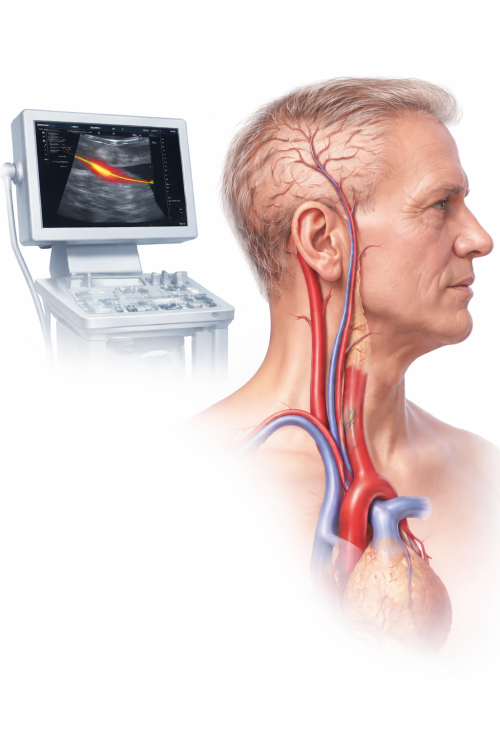
Carotid artery stenosis is a major cause of ischemic stroke and one of the most important treatable vascular conditions affecting the brain. Early detection and proper management can significantly reduce the risk of permanent neurological damage.
What Is Carotid Artery Stenosis?
Carotid artery stenosis refers to narrowing of the carotid arteries — the two main blood vessels in the neck that supply blood to the brain.
The narrowing is usually caused by atherosclerosis, a buildup of plaque made of cholesterol, fat, calcium, and inflammatory cells.
As plaque accumulates:
- Blood flow to the brain decreases
- Clots can form
- Plaque fragments may break off and travel to the brain
This can lead to a Transient Ischemic Attack (TIA) or a full ischemic stroke.
What Causes Carotid Artery Stenosis?
The most common risk factors include:
- High blood pressure (hypertension)
- High cholesterol
- Diabetes
- Smoking
- Obesity
- Sedentary lifestyle
- Family history of cardiovascular disease
Carotid artery disease develops gradually over years, often without symptoms.
Symptoms of Carotid Artery Stenosis
Many people have no symptoms until a stroke occurs. However, warning signs may include:
- Sudden weakness or numbness on one side of the body
- Difficulty speaking or understanding speech
- Vision loss in one eye (amaurosis fugax)
- Sudden dizziness or loss of balance
- Facial drooping
These may last minutes (TIA) or become permanent (stroke).
Sudden neurological symptoms require emergency medical attention.
How Is Carotid Artery Stenosis Diagnosed?
1. Carotid Doppler Ultrasound
First-line, non-invasive imaging test to measure blood flow and degree of narrowing.
2. CT Angiography (CTA)
Provides detailed vascular imaging.
3. MR Angiography (MRA)
Useful in evaluating cerebral circulation.
4. Digital Subtraction Angiography (DSA)
Used in selected complex cases.
Severity Classification:
- Mild: <50% narrowing
- Moderate: 50–69% narrowing
- Severe: ≥70% narrowing
Treatment depends heavily on severity and symptom status.
Management of Carotid Artery Stenosis
The management approach depends on:
- Symptomatic vs asymptomatic status
- Degree of narrowing
- Age and overall health
- Cardiovascular risk profile
1. Medical Treatment (Conservative Management)
All patients require optimized medical therapy.
Key components include:
- Antiplatelet therapy (aspirin or clopidogrel)
- High-intensity statins
- Strict blood pressure control
- Diabetes management
- Smoking cessation
- Mediterranean diet
- Regular aerobic exercise
Modern medical therapy alone can significantly reduce stroke risk.
2. Surgical Treatment: Carotid endarterectomy
Carotid endarterectomy is recommended for:
- Symptomatic stenosis ≥70%
- Selected patients with 50–69% symptomatic stenosis
- Certain high-risk asymptomatic patients
During this procedure, plaque is surgically removed from the artery to restore normal blood flow.
It is considered the gold standard treatment for appropriate candidates.
3. Carotid artery stenting
Carotid artery stenting is a minimally invasive alternative.
It is often preferred in:
- Patients with high surgical risk
- Previous neck surgery or radiation
- Specific anatomical considerations
A stent is inserted to widen the artery and prevent plaque collapse.
Which treatment is best?
There is no universal solution.
Clinical decision-making depends on:
- Symptom history
- Degree of stenosis
- Age
- Surgical risk
- Comorbid conditions
- Life expectancy
A comprehensive neurological and vascular evaluation is essential.
Can Carotid Artery Stenosis be prevented?
Yes — prevention and early detection are crucial.
Stroke risk can be reduced through:
- Blood pressure control
- LDL cholesterol reduction
- Smoking cessation
- Healthy diet (Mediterranean diet)
- Regular physical activity
- Weight management
- Regular cardiovascular screening in high-risk individuals
Frequently Asked Questions (FAQ)
Is carotid artery stenosis dangerous?
Yes. Severe narrowing significantly increases stroke risk.
Can carotid stenosis cause sudden stroke?
Yes. A plaque rupture or clot can suddenly block brain circulation.
When is surgery necessary?
Surgery is typically recommended in symptomatic patients with ≥70% narrowing.
Can lifestyle changes reverse carotid plaque?
Plaque cannot usually be fully reversed, but progression can be slowed or stabilized.
Carotid artery stenosis is a serious but manageable condition. With early diagnosis, proper monitoring, and a personalized treatment approach, the risk of stroke can be significantly reduced. Prevention, control of risk factors, and collaboration with a specialized physician are the most powerful tools for protecting your brain and vascular health. Do not ignore warning signs — timely action can make all the difference.